I think Thankful Thursday may be my favourite social media convention. It's wonderful that in the midst of all the noise, and selling, and argument, and time wasting that floods our feeds every day, so many people have decided to pause and say "Hey! Let's share a moment or two of positivity. Let's pause to celebrate the good things in our lives." I love that Thankful Thursday reminds me to pause and appreciate my good fortune in being who I am, where I am, in the circumstances of the moment.
Thursday, 31 March 2022
Thankful Thursday: Celebrating An Unexpected Gift
I think Thankful Thursday may be my favourite social media convention. It's wonderful that in the midst of all the noise, and selling, and argument, and time wasting that floods our feeds every day, so many people have decided to pause and say "Hey! Let's share a moment or two of positivity. Let's pause to celebrate the good things in our lives." I love that Thankful Thursday reminds me to pause and appreciate my good fortune in being who I am, where I am, in the circumstances of the moment.
Friday, 18 March 2022
Food For Hard Times: Poor Man's Sausage
I was scrolling aimlessly through Pinterest on a recent, rainy evening and came across a recipe from "I Cook and Paint," for Poor Man's Sausage. I'm trying to find ways to stretch my food budget. I rarely buy sausage any more. I miss it, so I pinned the recipe and, a few days later, gave it a try.
Friday, 4 March 2022
Seven Budget-Friendly Ways To Stay Fit
It's taken me years - decades in fact - to understand that there's a difference between athleticism and fitness, but I do get it now. If I don't keep my muscles strong and maintain some ease of movement, my quality of life will be diminished. I need to be able to lift and stretch and bend and pull and climb stairs and walk with sufficient ease to accomplish the day-to-day activities and chores that will allow me to live independently. That's my fitness goal. Your fitness goals may well be very different from mine but, whatever they may be, they'll be a lot more attainable if you can manage them without straining your budget.
If you're living on a limited income, many fitness activities can seem - and in fact are - unattainable. It's unlikely you'll be able to afford a Nautilus or Peloton or Nordic Track, or to engage in sports that require a lot of specialized equipment, or to pay ongoing fees like lift tickets or gym memberships, so let's focus on what you can do. Here are seven activities that won't break your budget.
Calisthenics
Calisthenics is a system of repeated movements that use a person's own body weight as a means to improve co-ordination and flexibility and build strength. I'm pretty sure most of us remember them from school gym classes: Push-ups, jumping jacks, sit-ups and the like. They're top of my list because they require no specialized equipment or clothing other than garments loose enough or stretchy enough to allow for ease of movement. If you're doing calisthenics indoors, you don't even need shoes.
(I do use a yoga mat when doing floor exercises but that's purely optional.)
There are lots of free calisthenics instruction videos on You Tube. If you choose to use them it's a good idea to watch them all the way through a couple of times before trying the exercises yourself. Paying attention to foot placement, body alignment, and breathing can help prevent injury and enable you get the most benefit from your efforts.
Free Access Workout Equipment in Parks
While this isn't available everywhere, many public parks have an area with fitness equipment that can be accessed and used for free. Check your parks authority website to see if this option is available near your home and, before you begin using the equipment, read the posted instructions.
Yoga
Although there's a huge industry built up around yoga clothes and yoga studios, you don't need to buy into it. You don't really need any specialized gear other than a yoga mat. As with calisthenics, your clothes should allow you freedom of movement. If you wear shoes while doing yoga, the soles should be of a kind that will keep your feet from slipping while you're exercising.
There are free yoga videos on YouTube but I opted instead to pay for online instruction. I purchased a couple of courses from Better 5 and found them very helpful. If you choose to pay for on line instruction, take into account your level of fitness while shopping for something that works for you. It's best to choose a course that will allow unlimited access, without an expiry date.
(I've mentioned Better 5 because their courses are designed with my age group in mind. The instruction is clear and the pace appropriate to my abilities. I don't receive any commisions or other remuneration from them.)
Stair Climbing
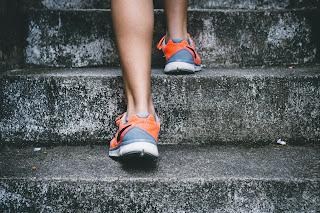
If you live in a multi-story apartment building like I do, stair climbing is always an available activity but even if you don't have access to indoor stairs at home you can find stairs in lots of other places. I seek out outdoor public stairways in hilly areas near where I live. They're often incorporated into paths between residential neighbourhoods, and into park or beach access trails. You can also do your stair climbing in multi-floor public buildings. The only equipment needed is comfortable clothing and suitable shoes.
Walking
Another affordable exercise, walking requires nothing more than comfortable, weather appropriate clothing and some footwear.
If you're making walking a regular part of your fitness routine, I do think you should get the best pair of shoes you can afford because arch supports and good soles can help prevent injury. I totally get that the best you can afford may be second hand or the least expensive pair from Walmart but, whatever you can manage, it will help if you do your best to ensure a good fit.
Other items I find helpful in keeping to my walking routine are waterproof shoes for rainy days or muddy trails, (It's a Wet Coast thing. Trails here are muddy for 8 months out of 12.), an umbrella for wet days, a warm hat and gloves for winter weather, a pedometer (basic mechanical pedometers are quite inexpensive), and - if I'm on rough footing - a walking stick.
(I cut the branch I use for my walking stick from a fallen tree while out hiking one day. I brought it home, removed the bark, and sanded it smooth but it worked perfectly well before I did all that.)
If you're going to be hiking alone or going out on a trail that's rough or not often traveled, be sure to let someone know your planned route and arrange a check in time to let them know you've returned safely. Take along a day pack with water, some protein bars (they can be made inexpensively at home) or GORP (Good old raisins and peanuts), a small first aid kit, two days' worth of any meds you require, and one of those lightweight silvery emergency blankets. If you can't afford a day pack and its contents it's best to stick to shorter walks on well trafficked, groomed trails near where you live.
If you have a smart phone, you can download the free version of the AllTrails app. It's a great resource for finding out about trails near you. Trails are described, mapped, the distance given, altitude changes graphed, and busy times noted. AllTrails can help you make informed choices before trying new routes.
(As with Better 5, I'm recommending AllTrails because it works well for me. It's not a paid endorsement.)
Community Sports Centers
Even if you pay the full price of admission, community fitness centers and pools are usually less expensive than private gyms and many offer free or subsidized access to people with low incomes. Where I live, that subsidy can include free admission to the pool and gym, and participation in a set number of drop in classes.
Friday, 11 February 2022
Simple Does It: A Clever Tip For Packing Lunches
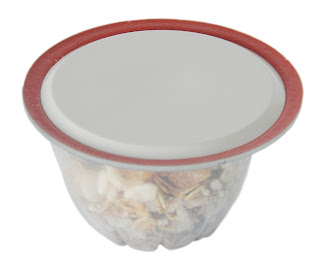
I don't buy individual fruit cups but my across-the-hall neighbour does. She also regularly attends Elder College classes and volunteers at the museum and one of the local seniors' drop in centers. She's a busy woman! And because she takes packed lunches with her to these activities she shared a handy tip with me. She passed on some empty fruit cup containers too.
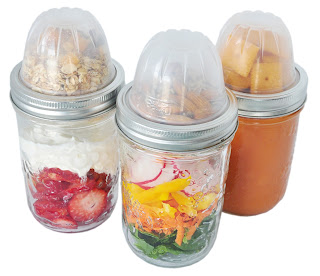
Did you know that those little plastic containers' rims are the perfect size to fit under a wide mouth Mason jar ring? I didn't either, but they are. 😊 My neighbour uses them to keep things that will be eaten together but don't store well in the same container - like salad and croutons, yogurt and granola, soup and crackers - conveniently packaged together in the soft sided cooler she uses as a lunch bag.
It works like this:
Fill your repurposed fruit cup with whatever ingredients you want to keep in there and then cover the top of the fruit cup with a Mason jar lid, seal-side-up.
Holding the sealer lid in place atop the cup, invert it and place the cup and lid sealer-side-down onto the top of your jar. Secure it in place with the Mason jar ring.
Easy peasy, right? I wouldn't recommend it for kids' lunches but for adults taking lunch to work or school it's brilliant.
I'll pass your thanks on to my neighbour, shall I? You're welcome. 😊
Friday, 4 February 2022
Krispies And Candies Cookies
A lot of the best stuff I make comes from me surveying my fridge and pantry, then going with what I have on hand. These cookies are like that.
I had a jar of mini M&M's that had seemed like a good idea while I was at Bulk Barn but not such a good idea when I got home. They sat there on my shelf looking all bright and cheerful and useless until I decided I had to use them up. And cookies are good, right? Pretty much any kind of cookie is a happy thing.
So...What did I have to put in the cookies along with the M&M's? I could've gone with nuts of some sort, but I had none and I didn't want to buy anything more. I did have Rice Krispies because I always have Rice Krispies. So, that's what I went with.
The finished cookies were surprisingly good. The coating on the M&M's and the crispy cereal gave them a pleasant crunch that made my mouth really happy.
If you'd like to make these cookies, you'll need:
- 2-1/4 cups all purpose flour
- 1 teaspoon baking soda
- 1 teaspoon salt
- 1 cup butter
- 3/4 c each white sugar and brown sugar, lightly packed
- 2 beaten eggs
- 1 teaspoon vanilla extract
- 2 cups mini M&M's
- 4 cups Rice Krispies
Friday, 21 January 2022
Why You Need This Stuff In Your Kitchen: Chickpea Flour
My home is on Vancouver Island, off the southwest coast of Canada. It's an expensive place to live and I'm on a fixed income, in a time of rapidly increasing inflation. I could choose to move somewhere with a lower cost of living but I've lived here almost all my life. My friends and family are here and I don't want to be further away from them.
That leaves me with two choices: I can either cut a discretionary expense like internet or my car out of my budget and put the money saved toward buying food, or I can accept that my range of food choices is declining and figure out how to make the best of what I do have access to. I've chosen the second.
Meat is incredibly expensive here right now so it's making fewer and fewer appearances on my plate and I'm okay with that. I'm an adept enough cook and know enough about basic nutrition to ensure that I get sufficient protein in my diet from other sources. I still include eggs and cheese in my diet but I also rely on nuts, seeds, whole grains, and legumes. Especially legumes.
If you look to other cultures that rely heavily on plants for the proteins in their diet, you'll soon see that beans, lentils, and peas play an important part in their cuisines. They're inexpensive, have an extraordinarily long shelf life, and - when well prepared - they taste good too. Dried legumes are often consumed in whole form, re-hydrated and cooked until tender, but they're also often ground into pastes or flours and added to dishes in these forms.
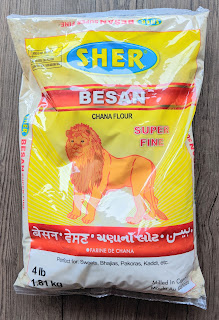
Chickpea flour is a cooking staple in India, and also found in Mediterranean and African cuisines. As the vegan lifestyle grows in popularity chickpea flour is seen more often in North American cooking too. It's versatile and rich in nutrients. One cup of chickpea flour contains 20 grams of protein, 6 grams of fat, 10 grams of fiber, 30% of the recommended daily intake of thiamine, 101% of the recommended daily intake of folate, and 25% of the recommended daily intake of iron.
There are 2 commonly available forms of chickpea flour in the stores here: white chickpea flour/gram flour and besan flour, which is made from brown chickpeas and more finely ground. Both are similar in nutritional value. There are differences in the way they're cooked though. Vegan Richa wrote an excellent post about the differences between chickpea flour and besan. It's worth clicking through to read it.
When you're cooking with chickpea flour, don't taste the raw batter. It'll taste awful and leave an unpleasant aftertaste too. When cooked, the flavour mellows into something slightly nutty and toasty; very pleasant.
I use chickpea flour in several ways:
- I sub it for half of the wheat flour in conventional baking powder or baking soda leavened recipes for pancakes, biscuits, cookies, etc. (You'll probably have to adjust the amount of liquid you add.)
- I use it in Indian recipes, as instructed by the recipe writer.
- I use it to make something akin to polenta, which I cool, then cut into pieces and use in a variety of applications. It can be used as a substitute in recipes that call for paneer or tofu, it can be cut into wedges or fries and baked, fried plain, or battered/breaded and then deep fried.
- I make it into a thin batter - sometimes leavened and sometimes not - and cook it as I would crêpe batter, for use in place of tortillas.
There are a host of chickpea flour recipes on Pinterest. Pop on over there, take a look, and then give some of them a try. I'm sure you'll find something you like and, in doing so, you'll add variety and nutritional value to your menus while stretching your food dollars further.
Sunday, 9 January 2022
Affordable Eats: Homemade Oat Milk
Have you looked at prices in the grocery store lately? I don't know about where you live, but here the price of everything is going up.
I'm on a fixed income so when prices rise the only option I have is to change my spending habits. More and more things are being struck from my grocery list because I simply can't afford them. Dairy prices are rising so yogurt is no longer on my shopping list and cheese is appearing on my table far less often. Milk prices are going up and nut milks, soy milk, rice milk, and oat milk have always been more expensive than cow's milk. Even so their prices are rising too.
Recently, I tried oat milk and found that it agrees better with my digestion than cow's milk or other non-dairy options so that's what I've been buying for the past couple of months. In addition to being kind to my tummy, oat milk contains fibre, iron, calcium, potassium, and B vitamins. That's some good nutritional value. Still, the cost...
While browsing Pinterest just before Christmas, I came across this post from Alpha Foodie. It looked easy to make and it would cost me pennies on the dollar in comparison to the stuff in the dairy case. I gave it a try and it worked so well I'm sharing it with you. Seriously, you need to make this. It tastes good and it'll save you money too.
Here are some notes based on my own batches:
I go for the "handful of soaked cashews" option because it gives the oatmilk a creamier consistency. Even with the cashews it's a lot less expensive than store bought.
I use unsweetened oat milk when cooking. If I'm drinking it as a hot beverage, I either sweeten it with maple syrup and add a little vanilla extract, or I use a Torani coffee syrup. Jenni Field's Pastry Chef Online's butterscotch coffee syrup is mighty fine too. 😊
If you choose to add the ingredients for any of the flavour variations listed in the post, you'll still save money over store bought.
If you prefer the mejool date option to using maple syrup, you can use (less expensive) regular dates from the baking aisle instead, by soaking them in warm water then letting them cool to room temperature before you add them to the oat milk.
I hope you'll give this a try. It's a good budget stretcher.